

Tesla Roadster Unveiled: The “Flying” Supercar That Hits 60 mph in Under 0.6 Seconds
After nine years of delays, Elon Musk’s SpaceX-powered Roadster jumped over cars, hung upside down and flipped through the air — but it won’t reach buyers until 2028.
A car that climbs an upside-down ramp, hangs from it like a bat, kicks off into a mid-air flip and lands on its wheels. That is not a movie scene — it is what the new Tesla Roadster did live on Thursday night in Texas. Tesla finally revealed its long-delayed second-generation Roadster, a two-seat electric hypercar packed with SpaceX cold-gas thrusters, and claimed its top version can sprint from 0 to 60 mph (about 97 km/h) in under 0.59 seconds — faster than any production car on Earth.
The show was spectacular. The fine print is less so: no price, fewer seats and less range than promised in 2017, and a production date pushed to 2028. Here is everything you need to know.
- Revealed October 15, 2026 at a SpaceX test site near Waco, Texas — almost nine years after the 2017 prototype.
- Three trims: Performance (0–60 mph under 1.6 s), Thrust (under 0.9 s) and Rocket (under 0.59 s).
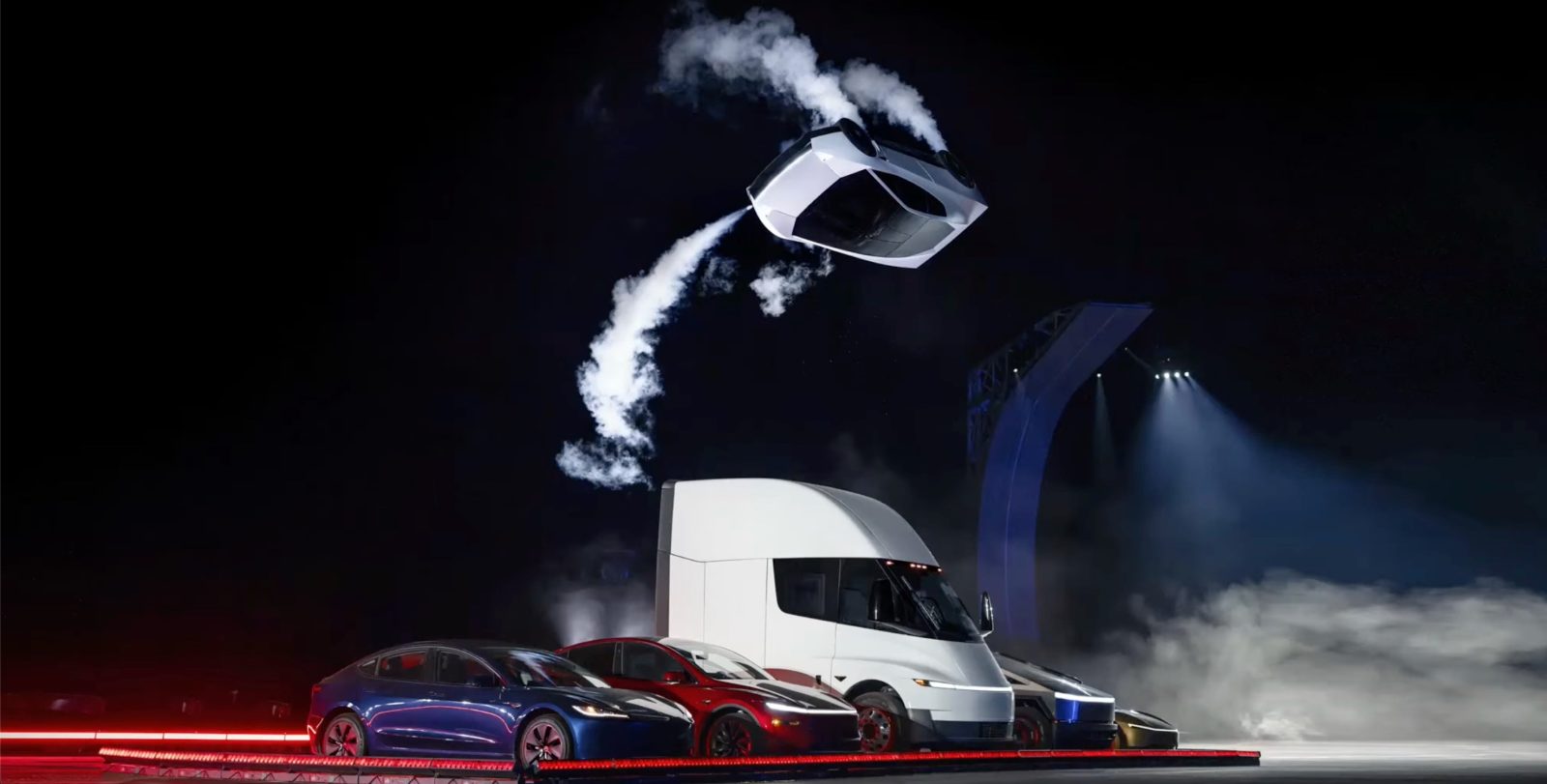
- “Flying” tricks: about 10 cold-gas thrusters and suction fans let it jump over cars, hang upside down and flip.
- Production in 2028, no price yet; reservations reopened with a $50,000 deposit.
- Trade-offs: range is now quoted at 300+ miles (vs. 620 promised) and seating dropped from four to two at most.
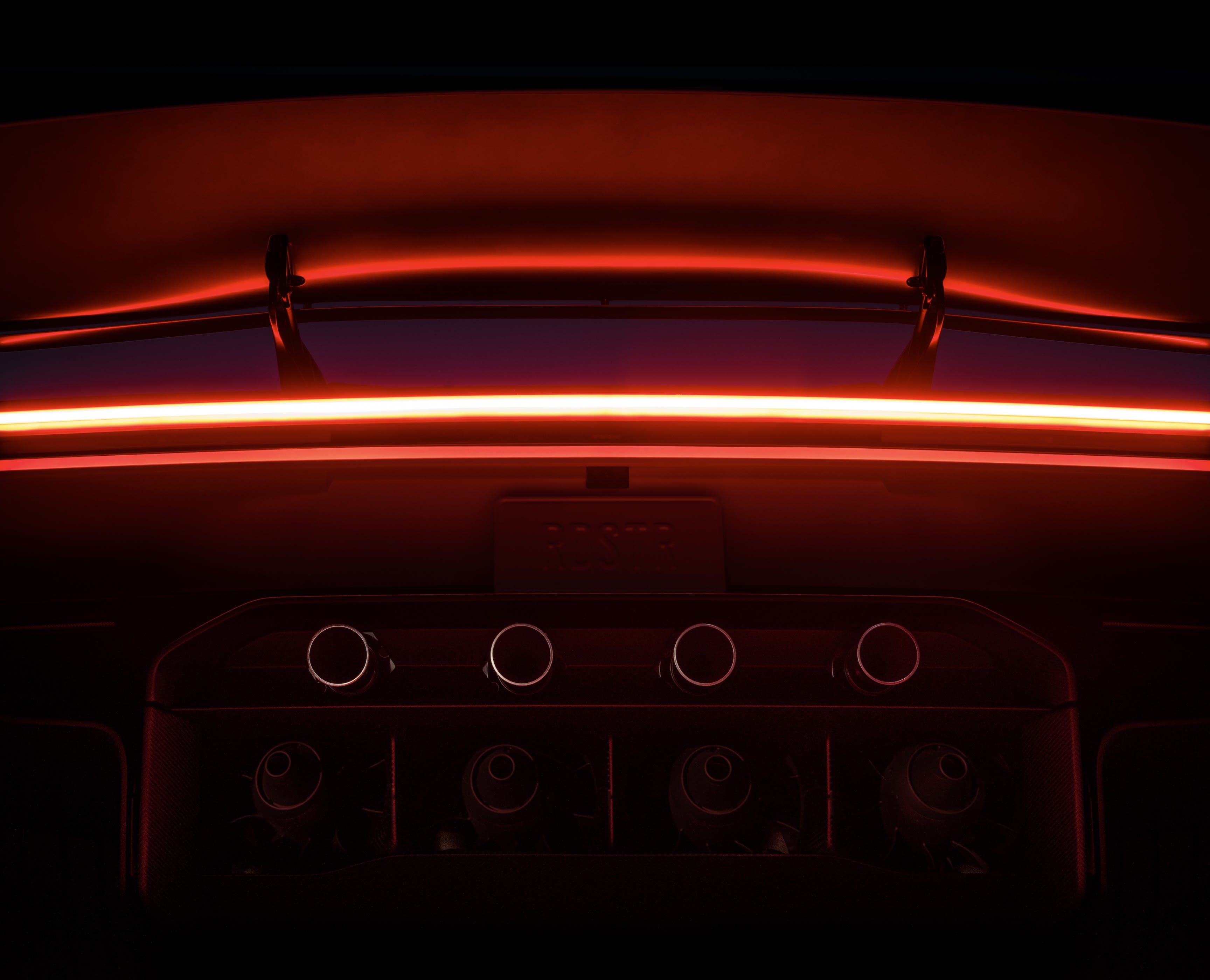


Tesla Roadster Unveil: What Happened in Texas
Tesla streamed the event on Thursday, October 15, 2026, from a SpaceX test facility in McGregor, just outside Waco, Texas. The reveal was first planned for October 1, but Tesla cancelled it on September 28 because of severe weather — the show could only be held outdoors.
Elon Musk was joined on stage by design chief Franz von Holzhausen and vehicle engineering vice president Lars Moravy. The demo was built to go viral: the Roadster used powerful fans and thrusters to drive up an inverted ramp, spin around and gently land on the pavement. Later, it used its jets to leap over a row of Tesla vehicles — a Cybercab, a Cybertruck, a Tesla Semi, a Model Y and a Model 3 — while moving.
Musk even told the crowd that a live audience was needed to prove the stunts were real and not computer-generated, and floated the idea of trying to jump Idaho’s Snake River Canyon — the gorge daredevil Evel Knievel famously tried to cross.
The best of the last of the human-driven cars.
Tesla Roadster Trims: Performance, Thrust and Rocket
Tesla only shared the line-up after the livestream, in a thread on its X account. There are three versions, and the two wildest ones are not for everyone:
| Trim | Purpose | Seats | 0–60 mph | Key hardware | Access |
|---|---|---|---|---|---|
| Performance | Road-ready | 2 | < 1.6 s | Active aero + multi-mode suction | Reservation |
| Thrust | Race-ready | 2 | < 0.9 s | Rear cold-gas thrusters | Limited release |
| Rocket | “Air-ready” | 1 | < 0.59 s | ~10 thrusters around the body | Invite only |
Tesla quotes a range of over 300 miles (about 480 km) and a top speed above 230 mph. Tesla’s own Roadster page says the Rocket version is not approved for public road use, and it treats Thrust and Rocket as add-on “augments” on top of the Performance car.
How the “Flying Car” Tech Works
🚀 SpaceX cold-gas thrusters
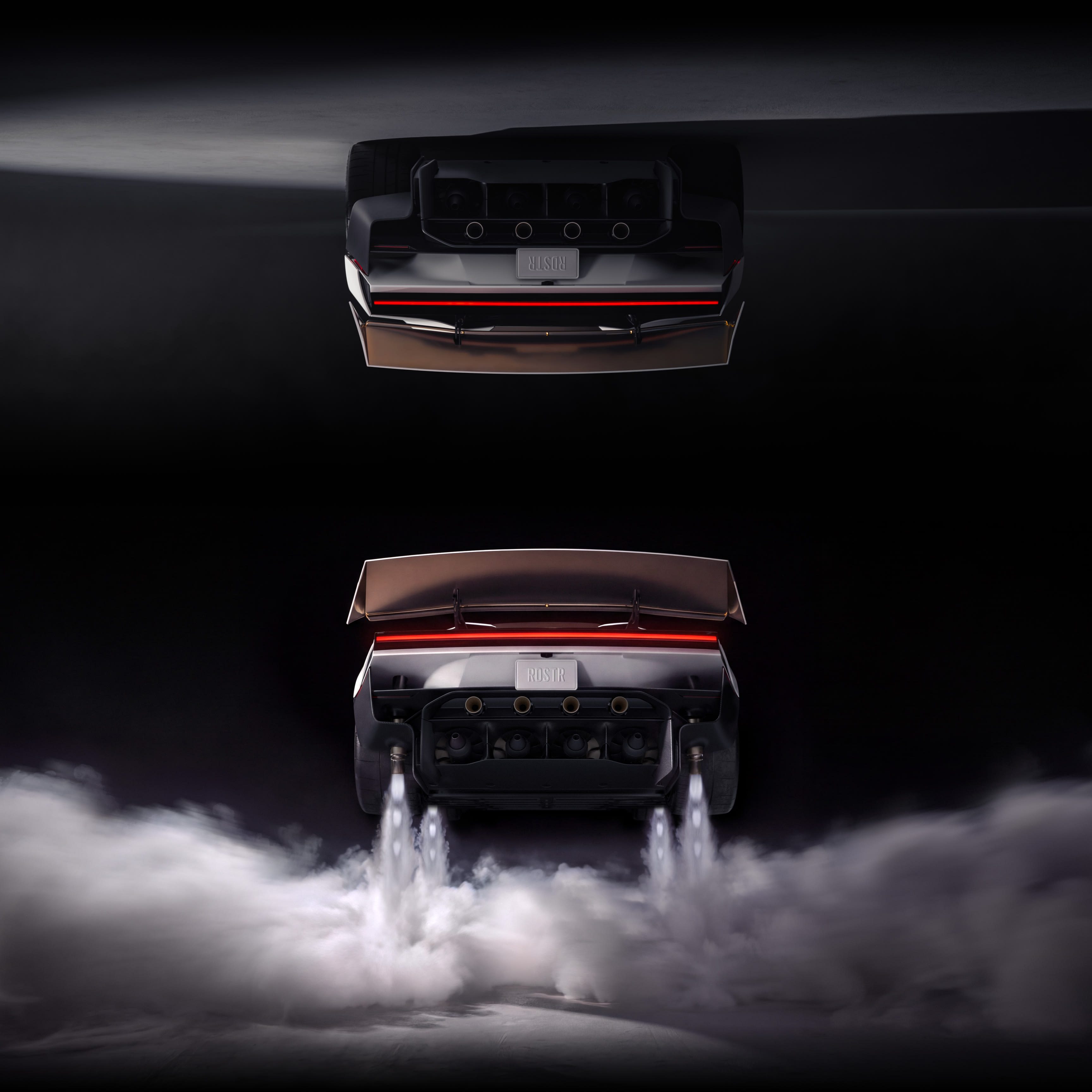
This is where SpaceX comes in. Moravy said the car uses 10 thrusters fed by 600 liters of compressed air to lift and spin it in mid-air, and the air tank can be refilled. Tesla says every usable empty space in the car is packed with carbon-fiber overwrapped pressure vessels (COPVs) — the same type of high-pressure tank used on SpaceX rockets. More gas means more “flight time.”
🏎️ Beating the traction limit
Every normal car is limited by how much grip its tires have. Tesla claims the thrusters make four to five times the force the tires can handle — which is how the Roadster can launch faster than a car that only pushes through its wheels.
🌀 Suction fans and F1-style downforce
The suction system does the opposite job: fans pull air from under the car hard enough to hold it upside down, even when standing still. In Track Mode, the car lowers itself and deploys active wings moved by the same actuators Tesla built for its Optimus humanoid robot. Tesla says downforce gets close to Formula 1 levels.
✈️ A design borrowed from spy planes
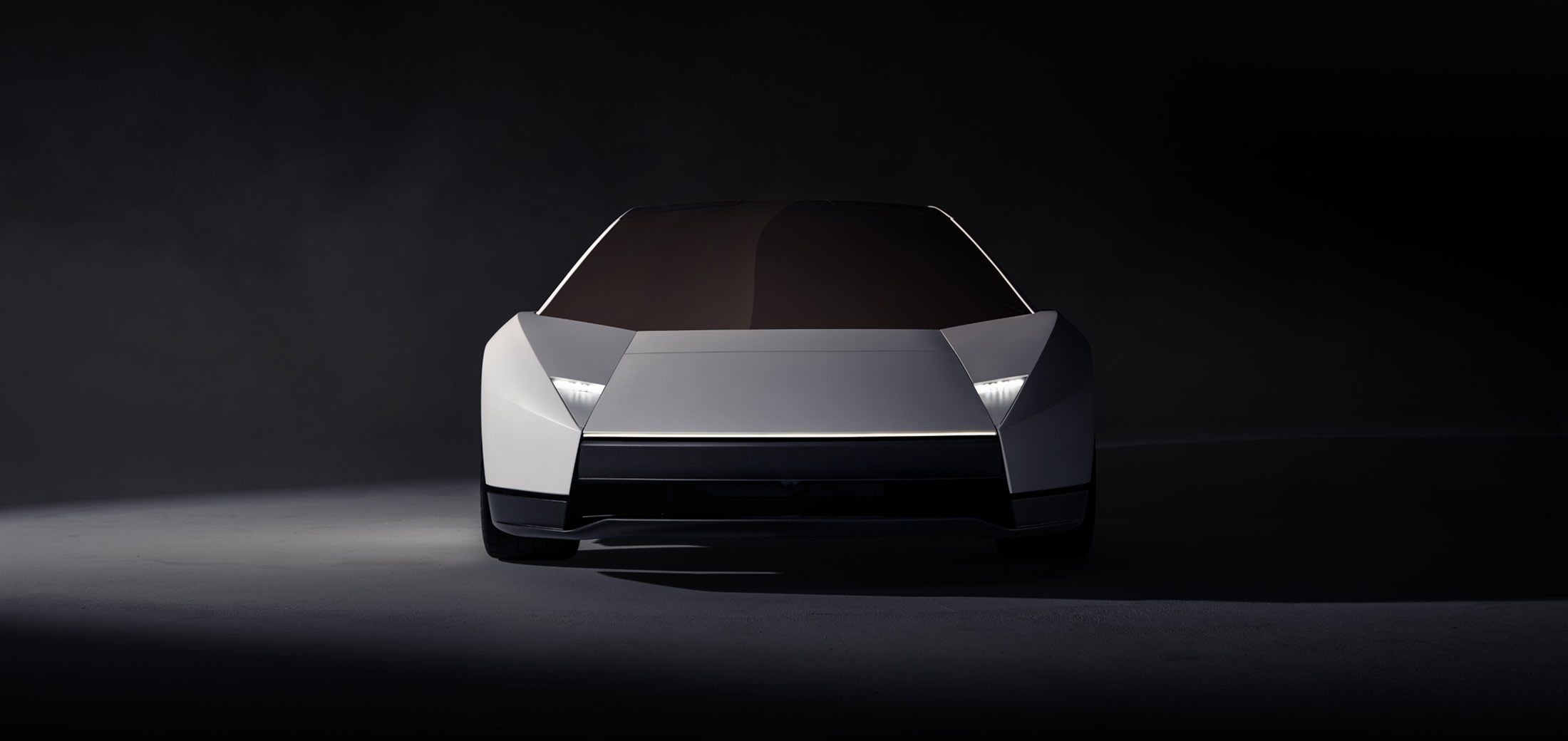
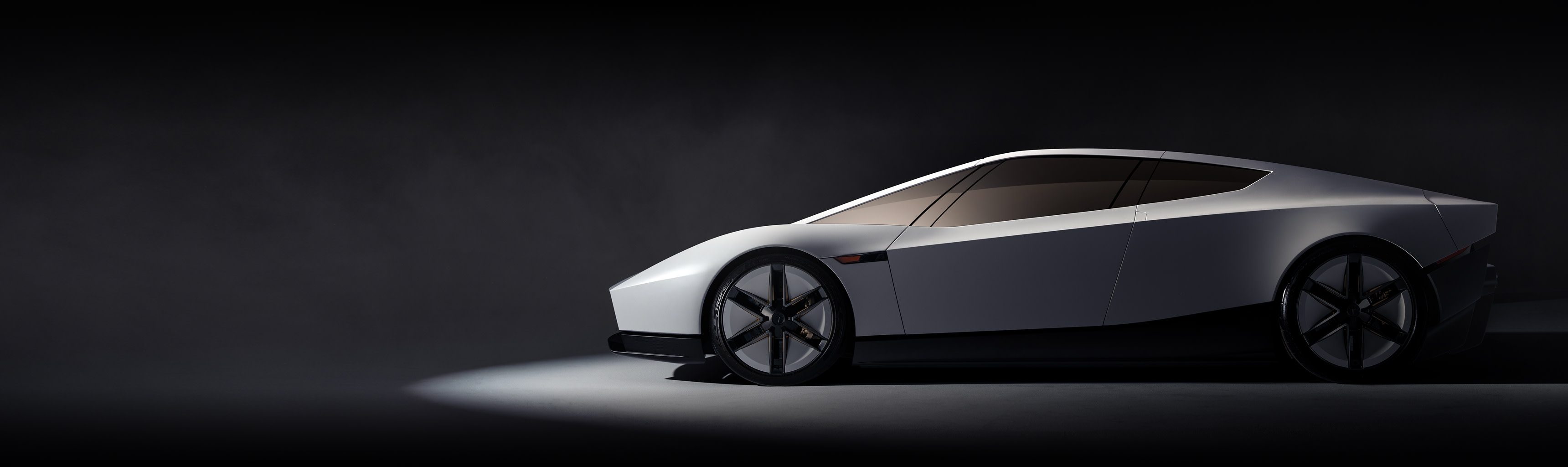
The 2017 curves are gone. The new Roadster follows Tesla’s angular “Cyber” style seen on Cybertruck, Cybercab and Optimus, with inspiration from the SR-71 Blackbird spy plane and the F-35 fighter jet. Highlights include hidden headlights, a full-width taillight, an “Ano White” paint said to borrow from rocket coatings, and tinted windows meant to look like a spacesuit’s gold visor. Inside, there is a steer-by-wire yoke, a center touchscreen, two small driver displays, fixed seats and plenty of magnesium, titanium and carbon fiber to cut weight.
Tesla Roadster 2017 Promises vs. 2026 Reality
Acceleration got much better. Almost everything else moved the other way:
| Spec | Promised in 2017 | Quoted in 2026 |
|---|---|---|
| 0–60 mph | 1.9 s | ▲ under 1.6 s (base) / under 0.59 s (Rocket) |
| Range | 620 miles (~1,000 km) | ▼ 300+ miles (~480 km) |
| Top speed | 250+ mph | ▼ 230+ mph |
| Seats | 4 (2+2) | ▼ 2 at most (Rocket: 1) |
| Price | From $200,000 ($250,000 Founders Series) | Not announced |
| Deliveries | 2020 | ▼ Production in 2028 |
Tesla Roadster Price, Reservations and Release Date
Tesla did not reveal a price for any of the three versions. It did reopen reservations: $5,000 is due right away, which Tesla calls fully refundable, and another $45,000 must follow within 10 days or the reservation is cancelled — the same $50,000 deposit Tesla asked for in 2017. Reports from the event say the Thrust version requires a $250,000 reservation, while Rocket is invite-only.
As for timing, Musk’s answer on production was simply 2028. He also admitted the Roadster is a “halo car” that may not move Tesla’s revenue much — it is a statement about what Tesla and SpaceX can build together.
Timeline: Nine Years of Tesla Roadster Delays
The Big Question: Real Car or Marketing Show?
The engineering is real, but so are the doubts. The headline stunts came from the Thrust and Rocket versions, which are limited or invite-only, and the Rocket is not road-legal. Critics also point out that range was cut roughly in half and two seats disappeared, even though early buyers paid deposits of $50,000 to $250,000 based on the 2017 specs.
Musk himself has warned that safety is not the main goal of this car, saying earlier this year that anyone whose top priority is safety should not buy a Roadster. Tech YouTuber Marques Brownlee, a long-time reservation holder, joked online that the promise of a flipping car shipping in 2028 sounded like a prank. Still, few car reveals have ever looked like this one — and that may be exactly the point.
FAQ: Tesla Roadster 2026
❓ Can the new Tesla Roadster really fly?
Not like an airplane. On stage, it used cold-gas thrusters and suction fans to hop over parked cars, hang upside down and flip before landing. These are short controlled jumps, not real flight — and whether owners will get more than that is still unproven.
❓ How fast is the Tesla Roadster from 0 to 60 mph?
Under 1.6 seconds for Performance, under 0.9 seconds for Thrust and under 0.59 seconds for Rocket, according to Tesla. 60 mph is about 97 km/h.
❓ When will the Tesla Roadster go into production?
Elon Musk says 2028. The car was first shown in November 2017 with deliveries originally promised for 2020.
❓ How much does the new Tesla Roadster cost?
No price has been announced. Reservations reopened with a $50,000 deposit for the Performance version ($5,000 now and $45,000 within 10 days). The Rocket trim is invite-only.
❓ What are the three Tesla Roadster trims?
Performance (road-ready, two seats), Thrust (race-ready, two seats, rear thrusters) and Rocket (one seat, thrusters all around the body, not approved for public roads).
The new Tesla Roadster is the most extreme car reveal in years: SpaceX thrusters, suction fans and a 0–60 mph claim under 0.59 seconds. But it comes with no price, less range, fewer seats and a 2028 production date. For now, the “flying” Roadster is an amazing show of engineering — and Tesla still has to prove it can turn that show into a car people can actually buy and drive.


